
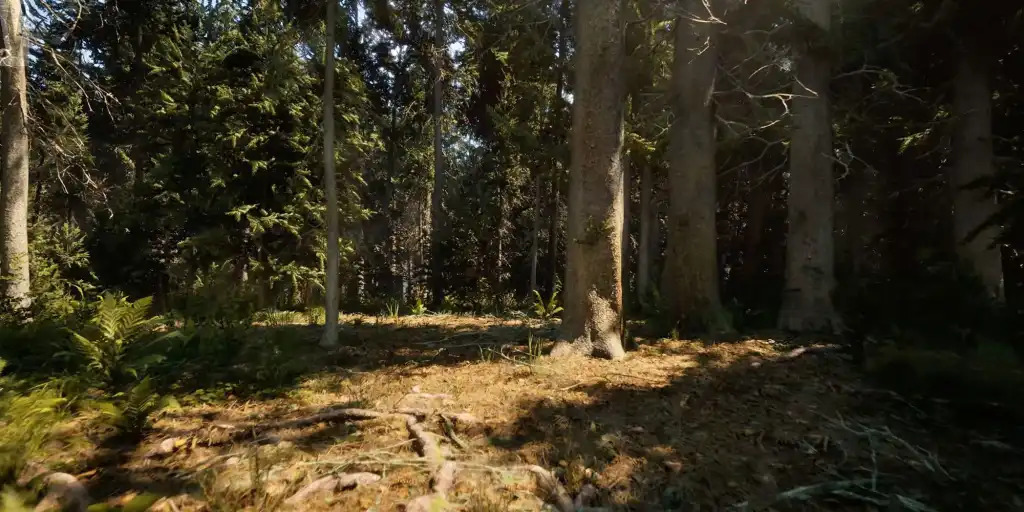
With Unreal Engine 5.6, Epic Games has taken procedural world generation (PCG) to an entirely new level. What once required complex workflows and external tools can now be done directly within the editor—faster, more flexible, and more scalable than ever before.
🔧 What Is Procedural World Generation?
Procedural world generation refers to the algorithmic creation of content such as landscapes, buildings, vegetation, or even entire cities—based on rules, parameters, and randomness. It not only saves time but also enables dynamic, ever-changing worlds.
🚀 What’s New in UE 5.6
1. PCG Graphs Directly in the Editor
Developers can now create visual graphs to define generation rules.
No coding required—everything runs through an intuitive node-based system.
Example: A forest that automatically populates based on terrain elevation, sunlight exposure, and proximity to water sources.
2. Runtime Generation for Dynamic Content
Content can now be generated at runtime—perfect for roguelikes, survival games, or simulations.
The engine supports streaming and optimization to ensure smooth performance.
3. Seamless Integration with Nanite and Lumen
PCG works flawlessly with Nanite (for high-detail geometry) and Lumen (for dynamic lighting).
This means vast, vibrant worlds with realistic lighting—without manually placing assets.
4. Custom Attribute Support
Developers can define custom attributes like “soil moisture” or “magical energy”—and use them in generation logic.
This leads to worlds that are not only visually unique but also mechanically rich and interactive.
🎮 What Does This Mean for Game Design?
The new PCG architecture allows developers to create worlds that respond to player actions. Imagine:
- Dynamic quest systems where locations and challenges evolve based on player progress.
- Reactive ecosystems that change with player interaction (e.g., animals migrate, plants die).
- Endless exploration without repetitive or predictable environments.
🧪 Conclusion: More Creativity, Less Repetition
Unreal Engine 5.6 makes procedural world generation not only more accessible but also more powerful. For developers, this means less time spent on repetitive tasks and more time focused on creative design and storytelling.